
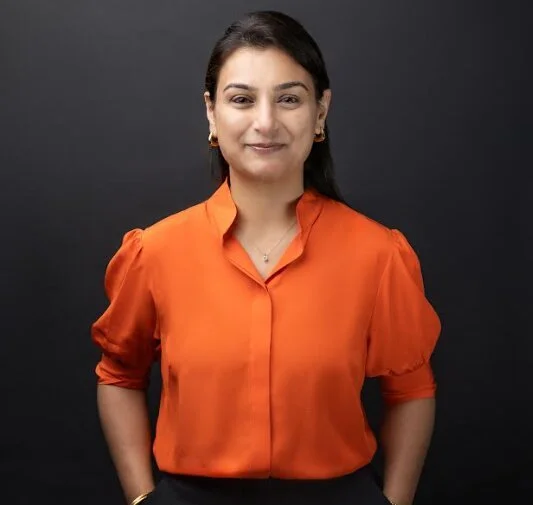
In the high-stakes world of music, where an artist’s name, voice, and persona can be their most valuable assets, protecting intellectual property has never been more critical—or more complex. NxtNow Music connected with Aparna Watal, Partner at Halfords IP and a leading trademarks expert across Australia and New Zealand, to explore the evolving landscape of brand protection in the music and entertainment industries.
With a unique background in chemical engineering and a connection to music as a poet and lyricist herself, Aparna brings both technical precision and creative empathy to her work. Her practice focuses on helping artists safeguard their intellectual property in an era of rapid industry change, global disputes, and disruptive new technologies.
In this insightful interview, Aparna breaks down landmark cases involving Katy Perry, Eminem’s Slim Shady, and Taylor Swift, while offering practical guidance on early trademark registration, the rising threat of AI-generated deepfakes and voice cloning, and strategic steps artists and labels must take to protect their brands in 2026 and beyond.
How did you initially become interested in intellectual property law, and what drew you specifically to trademark law in ever evolving industries like music and entertainment?
I came to IP law through an unusual route. My first degree was in chemical engineering. I spent time genuinely understanding how things are made, how innovation is built, and what it means to protect something you've created from the ground up. When I moved into law, trade marks became the natural home for that mindset. A brand is a form of intellectual infrastructure. Protecting it requires the same rigour you'd apply to any complex system.
But there's another side to this that goes beyond the technical. I've always had a deep relationship with music... the kind where a song doesn't just reach your ears, it reorganises something inside you. I write poetry and lyrics myself, and I think that creative practice gives me a genuinely different perspective in this work. When an artist tells me their name, their voice, or their persona is being replicated or exploited without their consent, I don't just understand it as a legal problem. I understand it as a violation of something deeply personal. The work I do in this space comes from both parts of me, the lawyer who builds airtight protection strategies, and the writer who knows exactly what it costs to make something original.
The music and entertainment industries are also fascinating precisely because they evolve so quickly. The cases we are seeing now involving Katy Perry, Taylor Swift and Eminem are not just celebrity disputes. They are the industry working through genuinely unsettled legal questions. That complexity is exactly what makes this area of practice so compelling.
The trademark battle between singer Katy Perry and Australian designer Katie Perry recently concluded after almost 17 years with a court ruling in favor of the designer. What key lessons does this case offer artists building their music brands and merch lines?
This case is a landmark, and it deserves to be understood carefully – not just as a story about one designer beating a global superstar, but as a set of clear principles that every artist building a brand should internalise.
The first and most important lesson is that fame does not guarantee ownership. Katy Perry is one of the most recognisable names in music, but the Australian High Court found that her team could not prove a single real consumer had confused the two brands in over a decade of coexistence. Reputation in music does not automatically extend into clothing. Those are different markets, and a trademark reflects where you actually operate, not where your fame reaches.
The second lesson is that early registration is imperative, but so is using that mark consistently. Australian designer Katie Taylor launched her fashion label in 2007 and applied to register it as a mark for clothing in late 2008. That filing date, and her ongoing use of it since, gave her a statutory right that the Court ultimately respected. The majority of the High Court determined that a valid registration is a real legal monopoly, not a placeholder that evaporates when a more famous brand arrives.
The third lesson is the significance of the 3:2 split. Five High Court judges looked at the same facts and reached two different answers. That tells you something critical. This area of law is genuinely complicated, and the standards for what counts as a reputation 'extending' into another field are not settled. When the law is that finely balanced, every artist and brand owner should be getting specialist IP advice before assuming their fame covers them.
The fourth lesson is what I call the 'assiduous infringer' doctrine, noted by Justice Steward in his reasons. The principle that a party who knowingly and persistently infringes a registered mark cannot then use the confusion it created to cancel that registration, is potentially very significant for small business owners. It can provide a genuine shield.
The practical takeaway for musicians building merch lines is to register your trademarks early, register them across the specific categories you actually use, and use them consistently. Do not assume your cultural profile is a substitute for a registered right.
We’ve also seen Eminem aggressively protecting his “Slim Shady” persona against the Australian beachwear brand “Swim Shady,” and Taylor Swift facing trademark actions concerning her branding and her voice. Why are these high-profile disputes significant for emerging and independent artists in the music industry?
These cases matter for emerging artists precisely because they illustrate dynamics that apply at every level of the industry – not just to superstars.
Take the Slim Shady versus Swim Shady dispute. Eminem's team filed a petition to cancel Swim Shady's US trademark and is opposing their Australian application on the basis that the beach brand could mislead consumers into thinking they were buying something associated with the rapper. The Sydney brand has pushed back, arguing the two parties are in significantly different industries and that certain 'Shady' marks have not been actively used in commerce in Australia.
That last point is the one emerging artists consistently underestimate. Trademark rights must be maintained through active use. If you register a mark in a territory but do not genuinely use it there, you may lose the protection you thought you had. Registration is the beginning of a brand protection strategy, not the end of it.
The Taylor Swift 'Life of a Showgirl' dispute is equally instructive. Las Vegas performer Maren Wade filed suit alleging Swift's 2025 album branding was too similar to her own 'Confessions of a Showgirl' mark, which she had used for a column and a live show since 2014. What makes this especially significant is that the US Patent and Trademark Office had reportedly flagged the similarity before the album's release. When a trademark office issues that kind of warning, it is an early legal signal that proceeding may invite litigation. One of the most avoidable and costly mistakes any artist can make is forging ahead after being told there is a likely conflict. We have seen that situation unfold recently in Australia where a major financial services provider went ahead with a brand despite receiving that sort of objection from the Australian Trade Marks office and has since found itself in significant trouble and is now having to rebrand after building its brand equity for over a decade.
For independent artists, the lesson is really about the scale of risk. Major artists with large platforms must be particularly alert to what I call 'reverse confusion' — where their fame and reach can overwhelm a smaller creator's brand, causing fans to assume the original rights holder is copying the larger artist, not the other way around. That dynamic can cause real damage to the original creator, and it is exactly the kind of scenario that expensive litigation follows.
The overarching message: your artist name, alter ego, or creative persona is a commercial asset. It needs active legal protection, not just cultural recognition.
In 2026, how is AI changing trademark strategy in the music industry, and what practical steps can artists and labels take to protect themselves?
AI is changing trademark strategy in ways that were genuinely unimaginable a decade ago. The most significant development we are seeing right now is the emergence of what practitioners are calling the 'trademark yourself' strategy – the use of trademark registration to protect voice, likeness and image in an era where AI tools can replicate all three at scale.
Matthew Mcconaughey and Taylor Swift's recent filings are the clearest current example. Through her company TAS Rights Management, Swift filed trademark applications with the US Patent and Trademark Office for her sound marks covering her voice saying 'Hey, it's Taylor Swift' and 'Hey, it's Taylor,' and a visual trademark covering a specific photograph of her performing. These filings are specifically designed to address the threat posed by AI-generated deepfakes and voice cloning. Similarly, McConaughey has sought to register his iconic phrase “alright, alright, alright” in his voice.
The legal logic behind this is important to understand. Traditional copyright protections do not fully cover AI-generated imitations. A newly generated voice that sounds like an artist often exists in a legal grey area — it is not a copy of a specific recording, so copyright may not attach.
Trademark law, by contrast, protects distinctive signs that identify a source. If an AI-generated voice is confusingly similar to a registered sound mark, it may constitute infringement regardless of whether any specific recording was copied.
For artists and labels, the practical steps right now are as follows:
Register distinctive elements of your brand persona, be it sound marks and visual marks covering your most distinctive vocal phrases, signatures and images. These may provide an additional legal layer that copyright alone does not.
Monitor AI platforms actively. Tools that track unauthorised use of your voice or likeness are no longer optional — they are a core part of brand management.
Engage a specialist IP lawyer, not just a general entertainment lawyer, to audit your existing registrations for AI-specific vulnerabilities.
Understand the territorial dimension. AI-generated content is distributed globally. Your registrations need to reflect the markets where your audience is, not just where you are based.
Act on warnings. If the USPTO or IP Australia flags a conflict when you are seeking to register a mark, treat that as a hard stop, not a speed bump.
The 'trademark yourself' approach has not yet been fully tested in court with respect to AI. But that’s the direction of travel for now, and the artists who establish their registrations now maybe in a stronger position when that litigation does come.
Beyond voice and likeness, how do you see AI-generated music, deepfakes, and synthetic content impacting copyright and trademark enforcement in the coming years? Do you think current laws are keeping up, or do we need significant updates?
If I can put it bluntly: no. Current law is not keeping up. Copyright law was designed for a world where infringement required copying. AI-generated music does not copy in any traditional sense. A model trained on thousands of songs can produce output that sounds like a specific artist without reproducing any single protected recording. That is a gap in copyright protection that legislators have not yet adequately addressed.
Trademark law is being stretched in creative directions – the 'trademark yourself' filings are an attempt to fill the void. But trademark protection was not designed to be a comprehensive solution to AI identity theft. It has real limitations: the marks need to be distinctive, they need to be used commercially, and enforcement requires evidence of confusion. In a world where deepfakes distribute in seconds to millions of people, those evidentiary requirements can lag dramatically behind the actual harm.
Right of publicity laws, which prevent unauthorised commercial use of a person's name, voice or likeness, exist in various US states and in some other jurisdictions, but they are not uniform.
Some states have strong protections; many other jurisdictions have very little.
What I think could help, and what the industry should be actively advocating for, includes several several possible directions. A clearer and uniform right of publicity law that explicitly addresses AI-generated replications is one option that has gained traction in academic and policy circles. Others are calling for explicit statutory treatment of AI-generated music and voice content within copyright law itself addressing questions of authorship, ownership, and infringement in scenarios where no traditional copying has occurred. There are also growing conversations around whether AI platforms should face clearer obligations to obtain consent before training on an artist's voice or likeness, and before distributing synthetic content that resembles a real person. None of these are settled proposals. They are live debates, and reasonable people disagree on the right mechanism. But the direction of the conversation is clear.
Some countries are moving faster than others. The EU AI Act is an example Australia is in the earlier stages of considering AI reforms. The challenge for any jurisdiction is that by the time legislation passes, the technology has often moved on. The legal framework will always lag, which is why smart, proactive IP strategy at the individual artist level matters so much right now.
What emerging trends or challenges in intellectual property law should artists and music industry professionals prepare for?
There are several trends I would highlight for artists and industry professionals looking ahead.
The first is the globalisation of brand disputes. The Katy Perry case illustrates this clearly, an Australian designer and an American singer-songwriter in litigation for 17 years across multiple court levels and jurisdictions. As artists build global fanbases and merchandise operations, IP disputes are inherently international. You cannot protect a brand adequately with registrations in only one market.
The second is the increasing intersection of trademark and copyright in the AI context. Artists are discovering that they need both,- copyright for their specific works and recordings, and trademark for their name, voice, image and persona. Those two bodies of law are increasingly being deployed together as a unified enforcement strategy, and the professionals advising artists need to be fluent in both.
The third is the use of non-use challenges as a tactical weapon. The Swim Shady case demonstrates this. The Sydney brand filed non-use applications against Eminem's Australian trademarks, arguing they had not been actively used in commerce. This is a legitimate and increasingly common strategy. Every artist and brand owner should be auditing their registered marks to ensure they are genuinely in use across the territories where they hold registrations. A mark you are not using is a liability, not an asset.
The fourth is the growing importance of 'search before you launch.' The Australian Zip Co case and the Taylor Swift 'Life of a Showgirl' dispute could potentially have been avoided – or at least better anticipated – with a thorough clearance search before the album title was announced, artwork was finalised, and merchandise was printed. IP should be a first step in creative development, not a final compliance check.
The fifth, and perhaps the most significant for the long term, is that artistic identity is more clearly a legal and commercial asset now than ever before and it must be managed with the same rigour as any major corporate asset. Today's biggest music names are monetising their identities through merchandise, licensing, partnerships and direct-to-consumer retail at a scale that was not possible twenty years ago. That evolution means trademark disputes are becoming an unavoidable feature of the music business.
My strongest advice to artists at every level – whether emerging or established – is to bring specialist IP counsel into your team early. Not after the conflict arises, not after the IP Office rejection arrives, but at the beginning. The name above the stage is often just as valuable as the work performed on it. Protect it accordingly.
About Aparna Watal, Partner, Halfords IP
Aparna Watal is a trade marks expert practising across Australia and New Zealand. She is a partner at Halfords IP, where she manages the firm’s trade marks and domain names practice. She brings extensive experience in trade marks, domain name disputes, consumer law, and copyright. She is known for her practical, commercially focused approach and dedication to empowering clients in protecting their brand identities in dynamic markets.