
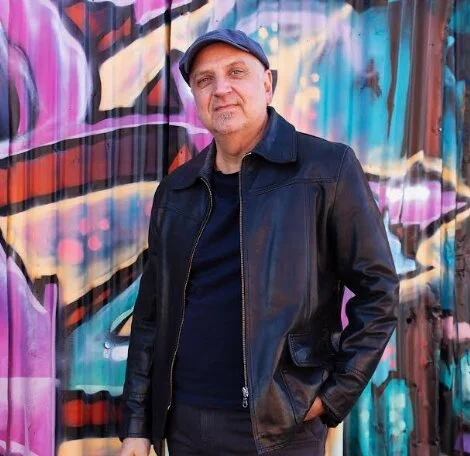
As 2026 comes to a close, NxtNow Music connected with Con Raso, Managing Director and Co-Founder of Tuned Global, to talk about where music technology is heading next. Since 2011, Tuned Global has helped more than 40 companies in over 70 countries launch music experiences across streaming, gaming, fitness, aviation and more, which has given Con a rare view of how music reaches listeners beyond the major platforms.
We asked him six questions about the issues shaping the industry: licensed AI and what it could unlock, how AI use in a track should be disclosed and credited, streaming fraud, safer music filtering for children, and whether a listener’s taste profile could one day follow them from service to service.
Read on for Con’s take on why the AI conversation is moving from “can it make a song?” to “how can we remix and rework music fairly?”, why he’s reluctant to call AI music fraudulent, and what 2027 could mean for independent artists, rights holders and fans.
AI dominated the music industry conversation in 2026. Where do you think the most meaningful AI innovation will happen in 2027?
The discussion around AI in music is already shifting beyond whether AI can produce a new track. As licensed environments open up, existing music can be altered, adapted or reworked into new versions, with the original rights holders, songwriters and artists still getting paid. This year marked the beginning of this shift in the landscape, with companies starting to secure licences from labels, especially the majors and larger independents.
On top of this, over the coming year I expect people to start asking, “What kind of user experience do I want to enable with agentic AI?” With the end user experience as the focus, I expect the opportunities for AI innovation in music to explode.
As labels and rights holders become more open to licensing AI-powered music experiences, what kinds of new products or listening experiences could that unlock for consumers?
Rather than focusing only on creating entirely new music, I expect the questions to become: how do I modify music, and how do I create different versions of it? This would happen within a framework that ensures the original rights holders, songwriters and artists are compensated for their part.
People are incredibly creative, and once there is a licensed framework for modifying and versioning music with AI, I believe those creative journeys are going to skyrocket.
The line between human-made and AI-assisted music is becoming increasingly difficult to define. Do you think the industry needs clearer standards around disclosing when and how AI has been used in a track?
Yes, and in 2027 I think the industry conversation will turn more towards transparency. Auto-Tune was arguably one of the very first AI tools, and the same goes for plug-ins and the other tools people have long used to build interesting loops and then reshape them.
Have we used technology and algorithms before to adapt music for a major artist? Absolutely. For me, it’s more a matter of disclosure. When I read the liner notes to see who contributed to an album, should I be told if AI contributed? If everyone else is credited, why not? Over the next 12 months, I expect we’ll see more structure around how AI credits and disclosure is shared.
Streaming fraud has become a major concern for platforms, labels and artists. How do you expect fraud detection to evolve in 2027, and where should the industry draw the distinction between AI-generated music and genuinely fraudulent activity?
The industry has moved quickly from acknowledging streaming fraud as a major problem to expecting platforms and partners to demonstrate how they tackle it in practice, including within contracts. Although some regard AI music as fraudulent, fraud has more to do with how music is used and distributed, and I think that will only become more important.
Whether AI music counts as fraud is a really interesting question, and personally I’m reluctant to call AI music fraudulent. For me, it comes down to detecting not just the music itself but how it’s experienced and used, and understanding how the fraudulent streaming happened in the first place.
Today, music filtering for children often comes down to whether a track is marked explicit or not. Is that sophisticated enough, particularly when ideas about age-appropriate content vary between countries and cultures?
In 2027, the wider debates around children’s safety online will call for more nuanced music filtering than today’s basic explicit-content controls, particularly across different countries and cultures.
Countries around the world are under growing pressure to respond with social restrictions for children. Simply switching everything off isn’t a solution, because you have to ask what you’ll put in its place. I hope more attention will turn to closed ecosystems that are built to be engaging for children rather than simply restrictive. This is where AI could play a part: how well can it determine the acceptable threshold for different age groups across services and regions worldwide?
Consumers now move between streaming services, games, fitness apps, airlines and other digital experiences, but their music preferences rarely move with them. How close are we to a world where a listener’s taste profile can follow them across platforms?
Being able to carry an understanding of our music preferences from one service to another could begin to emerge as an important new opportunity in personalisation. How do we understand the taste profile of someone moving from Spotify to an in-flight experience, for example, and what does that really mean for them? I think it would be hugely impactful.
Personal AI could act as the bridge between services that are otherwise disconnected. It may be that my own personal AI knows me, and I can pass some of that knowledge to another service automatically. We might begin to see this towards the end of 2027, though it will still be at a very early stage.
About Con Raso, Managing Director & Co-Founder of Tuned Global
Con Raso is an entrepreneur passionate about innovation, new technologies and start-ups. Over the last few decades he has focused on creating innovative mobile and online distribution models within the B2C entertainment market, enabling brands to utilise music as a marketing tool via unique customer engagement strategies. Being well-versed in both technology and music, Con leads Tuned Global’s work helping businesses create scalable and innovative digital music experiences.
About Tuned Global
Tuned Global is the data-driven Music Cloud Platform that empowers businesses to integrate commercial music into their apps and launch complete streaming experiences using advanced APIs, real-time analytics, licensing solutions, rights management systems, AI-enabled music discovery, and customisable white-label streaming apps.
Our turnkey solutions for music, audio, and video - coupled with advanced AI capabilities and a broad ecosystem of third-party music tech integrations - make us the most comprehensive platform for powering any digital music project.
We streamline complexities in licensing, rights management, and content delivery, enabling rapid innovation and bringing new ideas to life. Since 2011, we’ve supported 40+ companies in 70+ countries - across telecom, gaming, fitness, health, media, aviation, and more - to deliver innovative music experiences faster and more cost-effectively.
For more information, visit www.tunedglobal.com.