
Interview: Boost Collective Talks About Their Music Ads Campaign Service

NxtNow Music connected with the team at music promotion and distribution platform Boost Collective for an exclusive Q&A to discuss their newly unveiled Music Ads campaign service, which is aimed at independent artists at very accessible price points.
During our interview, we asked about the inspiration behind the Music Ads development, how it helps artists drive long-term fans and momentum, the role that real-time analytics dashboard and ongoing optimization play in the campaigns, and much more.
What inspired the creation of Music Ads, and how did the idea evolve from Boost Collective's earlier work with independent artists and labels?
It came from watching what was working on our label campaigns. We've been in music promotion for years, and playlisting has always been a great way to put a song in front of real audience pockets. But on the campaigns where we were also running paid ads, we noticed something powerful happening on top of that: real listeners actively discovering songs, saving them, and then Spotify's own algorithm picking the song up and running with it. That growth kept going after the campaign ended. The question became obvious: how do we take this process, which was only really accessible to labels with big budgets and dedicated ad teams, and make it something an independent artist can just buy? That's Music Ads.
You mention that Music Ads was carefully tested with top clients and labels before becoming available more broadly. What results or key insights convinced Boost Collective it was ready for emerging artists?
A few big ones. First, we learned the results are predictable earlier than people think. The cost side of a campaign stabilizes fast, so we can tell within days whether a song is connecting or whether we need to change the creative approach. That's huge for artists on smaller budgets because it means less money wasted on things that aren't working. Second, we learned that saves matter way more than raw clicks. A cheap click means nothing if the listener never comes back. When saves are strong, the algorithm follows. And third, the biggest one: on our successful label campaigns, the majority of total streams actually came after the ad spend ended, from Spotify's algorithmic sources like Radio and Discover Weekly. Once we saw those patterns hold across different genres and budget levels, we knew the process was repeatable.
One thing we're always upfront about, though: your song is the end product. Ads put your song in front of the right people, but the people decide from there. A song listeners connect with can take off like a rocket through Music Ads. A song people aren't getting behind will struggle no matter how well the campaign is run. Our testing process exists exactly for that reason, so artists find out early and cheap instead of late and expensive.
How exactly do Music Ads campaigns help artists drive long-term fans and momentum, compared with older approaches like pitching to playlist curators?
I'd actually push back on the framing a little, because we love playlisting. It's a great way to access pockets of audience and it absolutely has a place in the marketing stack. The two do different jobs. On a playlist, your song is part of a lineup, and that's great for passive discovery. Music Ads are the option you reach for when you want all the attention on just your song. Someone sees the ad, clicks, and lands directly on your track making an active choice about it. They listen, and if it connects, they save it and follow you. Those active signals are exactly what Spotify's algorithm looks at. Enough of them and Spotify starts promoting the song for you through Radio, Discover Weekly, and your listeners' personal mixes. The best results we've seen come from artists treating these as layers that stack: ads driving focused attention and algorithmic signals, playlisting adding reach on top. It's not either or.
Can you walk us through how the done-for-you process, from analyzing an artist's brand and song to creating ad creatives and optimizing Meta campaigns, translates into better marketing results for new releases?
Sure. It starts before any money is spent. We look at the song, the artist's brand, and who the realistic audience is, because a great ad for the wrong audience is still a wasted ad. Then we build the creatives and launch on Meta, usually running from the artist's own Instagram rather than a generic business page, because we've found that drives a noticeably better follower pickup alongside the streams. From there it's about discipline. We watch the early cost signals closely, and if something isn't performing we kill it fast and adjust rather than letting budget burn. When something is working, we scale it and watch how streaming responds. The whole thing is a series of checkpoints: the song has to prove itself at a small budget before we push harder. Most artists trying to run ads themselves skip that structure, spend everything at once, and never learn what went wrong. The process is really what they're paying for.
What role does the real-time analytics dashboard and ongoing optimization play in helping artists understand and maximize the return on their Music Ads campaigns?
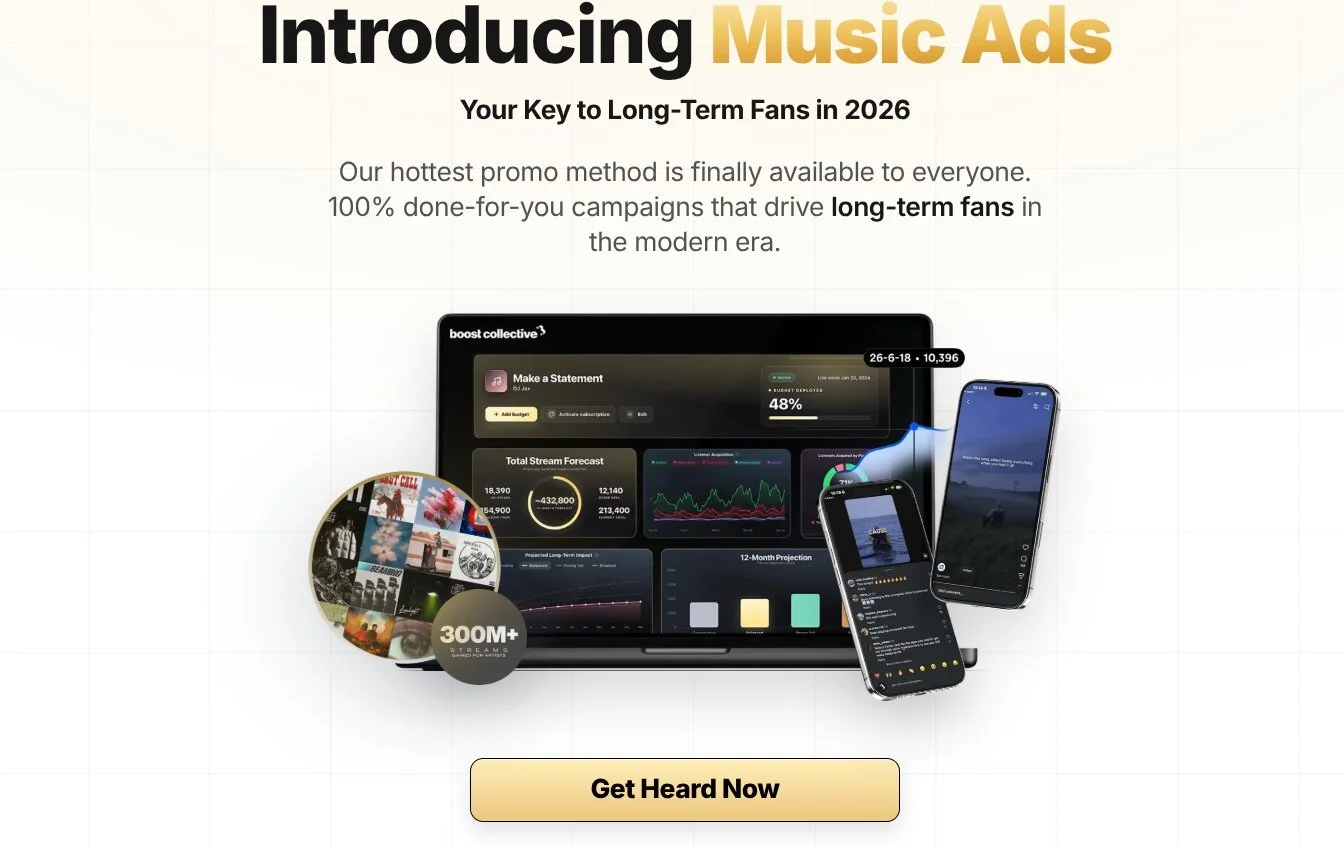
Clarity on what your dollar is actually getting you. Our dashboard shows what's actually happening while it's happening: the listeners being reached and how the song is responding on streaming. On our side, that same data is what drives the optimization. We're not making decisions on vibes. If the numbers say an ad is underperforming, we cut it. If a song is showing strong saves and the costs support it, we lean in. And because the artist sees the same picture we do, the dashboard also tells the honest story about the song itself. When people are loving a track, you see it in the data immediately, and that's your signal to push harder.
Looking ahead, how do you see Music Ads fitting into a broader strategy for emerging artists who want sustained growth rather than short-term spikes in streams?
I'd tell artists to stop thinking in terms of single campaigns and start thinking in terms of building an algorithmic profile. Every campaign teaches Spotify more about who your listeners are, and that knowledge carries into your next release. So the strategy is stacking: promote a release properly with focused attention from ads, layer in playlisting for added reach, let the algorithmic growth run, then hit the next release with an audience and an algorithm that already know you. Each cycle starts from a higher floor. And through all of it, the song stays the foundation. Marketing amplifies what's there. A great song with the full stack behind it is the closest thing this industry has to a cheat code. Our job with Music Ads is making sure that when an artist has that song, nothing about budget or ad expertise stands in the way of it reaching the people who'll love it.